Monday, 13 April 2026
Updated on 20 October 2026
Software for plumbing and heating businesses: maintenance jobs, scheduling and invoices gone digital
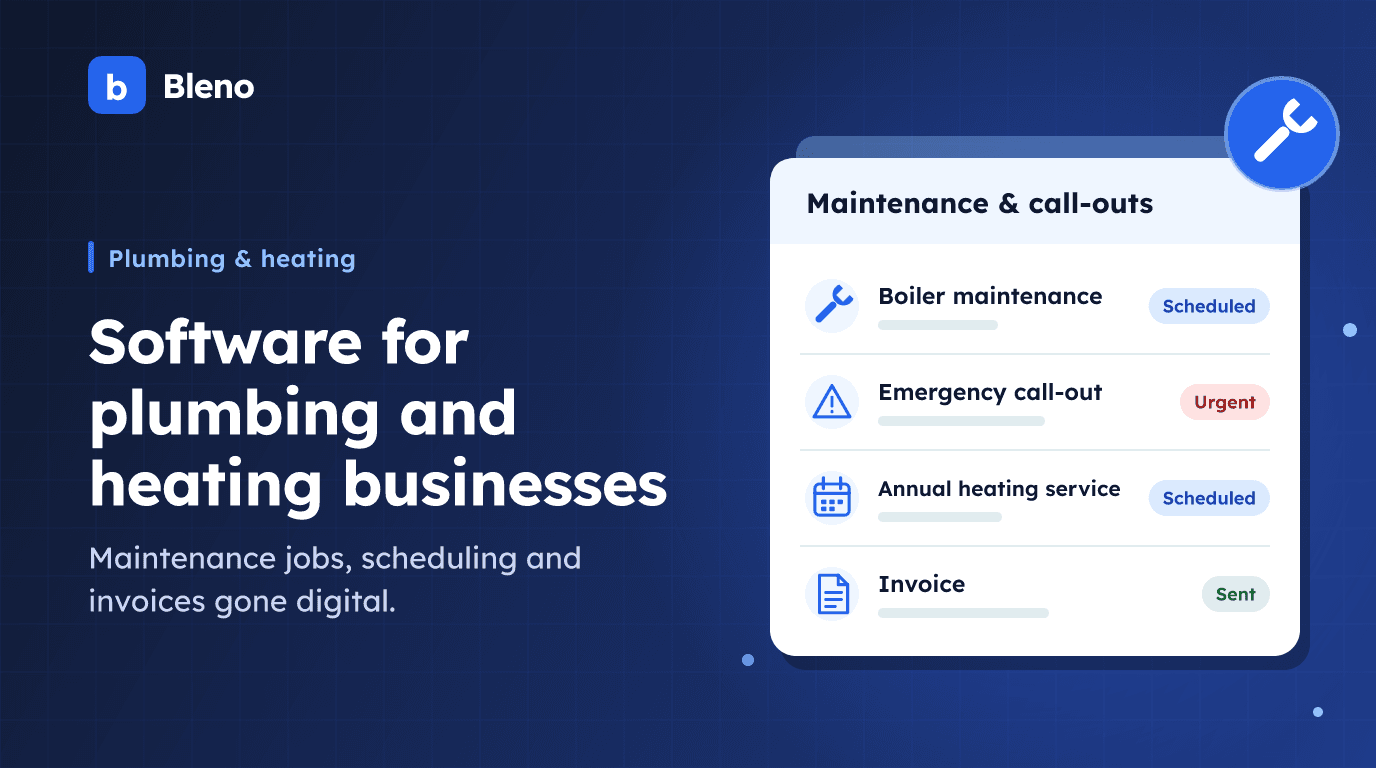
Plumbing, heating and air-conditioning businesses – known in Germany as SHK (Sanitär, Heizung, Klima) – have a particularly demanding day-to-day: emergency call-outs at 10 pm, annual boiler services for 200 customers, GAEB tenders for public projects in Germany and, at the same time, the daily coordination of fitters across different job sites.
What other trade businesses see as a challenge is often routine in plumbing and heating. That makes it all the more important to have software that really fits the requirements.
The particular challenges of plumbing and heating businesses
Maintenance contracts: recurring appointments with many customers
Many plumbing and heating businesses have maintenance contracts for heating systems, water heaters, heat pumps or air-conditioning units. That means hundreds of customers who need a technician once a year (or more often).
Without a system: customers are forgotten, appointments are missed and contracts bring in less revenue than they could.
Emergency call-outs – short-notice and unplannable
Heating failure in winter, a burst pipe at the weekend – plumbing and heating businesses have to react at short notice. Who is available? Who is closest? How is the call-out documented and invoiced?
Without digital scheduling: chains of phone calls, confusion and delayed invoicing.
Time-and-materials work
Many service jobs are invoiced on a time-and-materials basis: materials plus working hours. That requires clean time recording and fast invoicing – ideally while still on site.
A wide range of materials with frequent price changes
From copper pipe to radiators to thermostatic valves – plumbing and heating materials are varied, expensive and volatile in price. Anyone writing quotes without a current price list risks losses.
Which software functions are decisive for plumbing and heating businesses
1. Customer management with maintenance history
Stored for every customer: which system, when it was last serviced, any special features. At the next call-out, the technician immediately sees the system's history – no phone calls, no searching.
Example: The Richter family calls – the heating won't start. The technician opens the customer record: heating type, last service, known weak points. He arrives prepared, saves time and leaves a professional impression.
2. Planning board for short-notice dispatch
In an emergency it must be clear at once: which technician is available and closest to the site? The digital planning board shows at a glance where each fitter currently is and when they will be free again.
Example: Saturday, 10 am: a burst water pipe at a tenant's flat in housing estate XY. A look at the planning board: fitter Fischer will be finished at 11 am and is 3 km away. The job is scheduled immediately and Fischer is informed.
3. Time tracking for time-and-materials work
During a service call, the technician books travel to and from the site as well as working time to the project. The hours are immediately available for the invoice – no reconciling, no retyping.
Example: Maintenance call at Müller Ltd: 45 minutes' travel, 90 minutes' work. Everything booked directly in the app. The invoice is ready the next day – with exact hours and the materials used.
4. Never miss recurring maintenance appointments
Maintenance contracts often run for years. Bleno reminds you automatically when a maintenance appointment is due – and the appointment can be scheduled directly on the planning board. Our maintenance contracts feature shows how recurring appointments become plannable; for more practical advice, see the article Maintenance contracts in the trades.
Example: Annual boiler service for 120 customers. In September, all customers whose last service was more than 11 months ago appear automatically. Appointments can be scheduled in blocks – more efficient than reactive planning.
5. Quotes with current material prices
Plumbing and heating material prices change frequently – copper, stainless steel and plastics are volatile. If you import your supplier catalogue into Bleno, you always have current purchase prices as the basis for quotes.
Result: No guesswork in costing, no losses from outdated prices.
6. E-invoices for housing associations and public clients
Housing associations and public building managers – typical customers of plumbing and heating businesses – increasingly expect e-invoices. For businesses in Germany, Bleno creates ZUGFeRD-compliant e-invoices with no extra effort.
Case study: a plumbing and heating business with 8 employees
A plumbing and heating business in a medium-sized town looks after 150 private customers with maintenance contracts and 20 commercial customers, and regularly bids for public tenders.
Before going digital:
- Maintenance appointments kept in an Excel list and notes
- Time sheets collected weekly
- Quotes based on outdated price lists
- GAEB tenders (the German tendering format) skipped because they were too much work
- Invoicing 2–3 days after the job
After going digital with Bleno:
- Maintenance appointments appear automatically and are scheduled with a click
- Hours come in daily from the app, no retyping
- Quotes with the current catalogue in half the time
- GAEB tenders in Germany are worked on and won
- Invoices possible on the day of the job
The result: more jobs, less admin time, happier customers.
Conclusion: plumbing and heating businesses need software that knows their rhythm
Maintenance contracts, emergency call-outs, time-and-materials work and public tenders – plumbing and heating businesses live in several worlds at once. Software that covers all these requirements is not a luxury. It is the basis for keeping a growing business manageable at all.
For an overview of how Bleno supports plumbing and heating businesses, see the page Software for plumbing and heating.
Try Bleno free for 14 days and discover what digital tools can do for your plumbing and heating business. Get started.