Wednesday, 1 April 2026
Customer management for trade businesses: more jobs through better relationship management
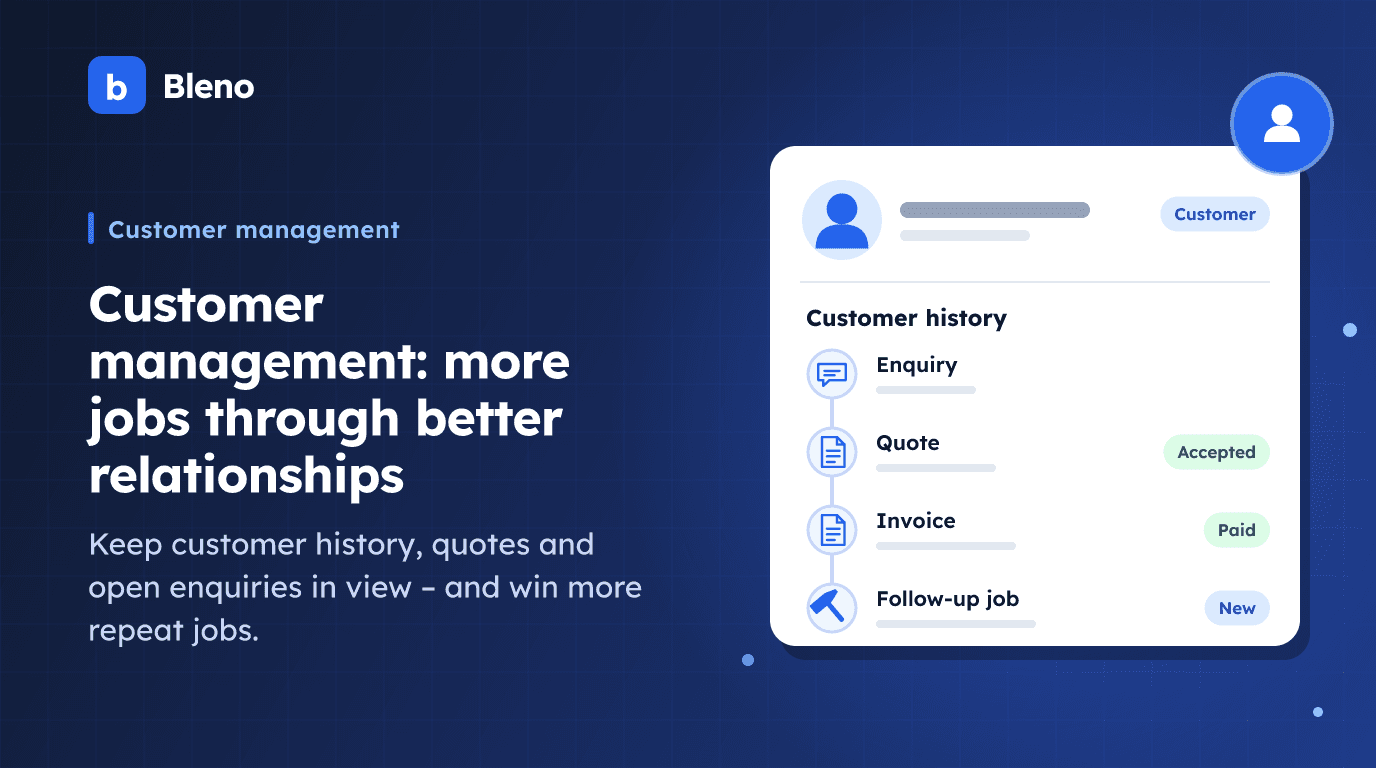
Trade businesses win a large share of their jobs through recommendations and regular customers. The relationship with the customer is often personal and built on trust – which is exactly what makes it so valuable. But when customer information is spread across WhatsApp chats, Excel spreadsheets and notebooks, that trust is hard to maintain.
What happens when a long-standing regular customer calls – and the employee who looked after them is off sick? Or when someone asks about a quote from last year that is buried somewhere in an email folder?
With digital customer management, this information is always available – for every employee, on every device.
What customer management has to do for trade businesses
In the trades, it is not about classic CRM with sales pipelines and sales forecasts. It is about something simpler and more concrete:
- Who is the customer? Contact details, contact person, address
- What have we done so far? All previous projects, orders and invoices
- What was agreed? Quotes, special terms, particular wishes
- What is coming up? Open enquiries, planned maintenance, follow-up appointments
This information in one place – that is customer management for trade businesses.
5 situations where good customer management makes the difference
1. A regular customer calls
Mr Weber calls – he wants to go ahead with the bathroom renovation that has been discussed for a while. The employee opens the customer record: the last project, the materials installed at the time, earlier quotes, special notes ("Doorbell doesn't work, please call").
The customer notices: they know me. They have everything to hand. That builds trust.
2. An employee takes over a customer
Normally colleague Schneider looks after the Brandt family. Today he is off sick. No problem – all the information is in the software. The colleague standing in knows what has been done so far, which materials were installed and what is still open.
No need to phone the sick colleague. No embarrassing questions to the customer.
3. Following up open quotes
Three weeks ago a quote for a patio extension was sent. The customer has not replied. With customer management you can see at a glance which quotes are still open – and follow up in a targeted way.
Many jobs are won simply because someone called again.
4. Scheduling annual maintenance automatically
Heating systems, fire extinguishers or lifts have statutory maintenance intervals. If you have stored your customers with the corresponding maintenance cycle in the software, you are reminded automatically when an appointment is due.
That is not only good for the customer – it secures regular revenue without new customer acquisition. How to build a plannable service business from this is explained in Maintenance contracts in the trades.
5. New employees look after existing customers professionally
A new fitter is to go alone to a long-standing customer. He opens the customer record, sees all previous projects, knows what was installed and is aware of any special notes.
He comes across as someone who knows the customer – even though he is meeting them for the first time.
Customer management and quoting: two things that belong together
A big advantage of integrated customer management: quotes and invoices are linked directly to the customer. When you create a new quote, customer data is taken over automatically – name, address and any special terms.
The other way round: when a quote is accepted, the order is immediately linked to the customer. The project history grows automatically.
What customer management cannot replace
Customer management is no substitute for good work and personal relationships. It is a tool that helps you maintain these relationships professionally and reliably – even as the business grows and more customers and employees join.
A business with 5 employees and 50 regular customers can still keep all that in their heads. With 15 employees and 200 customers? Impossible – without the help of software.
Conclusion: keeping regular customers is cheaper than winning new ones
Acquiring new customers is expensive and time-consuming. Regular customers who keep coming back and recommend you are a trade business's most valuable asset.
Good customer management helps you maintain these relationships – professionally, completely and without information getting lost between holidays, staff changes or system changes.
Try Bleno free for 14 days and keep all your customer information in one place. Get started.
More about the feature: Customer management in Bleno